BASIC SKILLS FOR ECOLOGISTS AND STUDENTS OF ECOLOGY - SOME PRACTICAL GUIDES
Courses Emily Bernhardt teaches
UNIV 102: Let's Talk About Climate Change
BIO 209: Ecology for a Crowded Planet
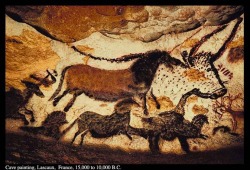
cave painting from cover of Ecology textbook
This course borrows its title and its viewpoint from this 2004 Science paper - this new general ecology course emphasizes the role of humans in local, regional and global environments throughout our overview of ecological interactions and ecological theory. The newly redesigned course emphasizes active learning and student engagement in scientific inquiry and discussion. I often team teach this course with Justin Wright. We use the online textbook SimUText Ecology for this course.
BIO 362LS:Aquatic Field Ecology
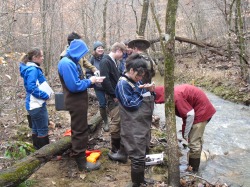
field observations in Mud Creek
This class is all about getting students to spend as much time as possible mucking about in streams, wetlands and ponds. The goal of the course is to gain experience in making field observations, turning those observations into questions and hypotheses and then figuring out ways to test those hypotheses in the field. As such the class is much more about the scientific process than about specific scientific content. Students in the class collectively make field observations and develop the questions that guide subsequent field observations. Grading in the course emphasizes the development of scientific writing skills. This course is appropriate for students who are enthusiastic about fieldwork as well as those students that want to gain experience with the scientific method. Visit our course website to lean more.
Biogeochemistry: an analysis of global change
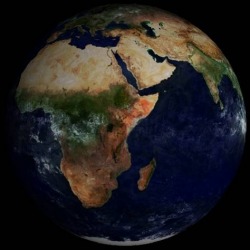
This graduate course spans the breadth of biogeochemistry. We begin with discussions of the origins of the Universe and the formation of planet Earth. The course moves through controls on primary production and nutrient retention in terrestrial, freshwater, and marine ecosystems and concludes with global element cycles. Throughout, we focus on recent changes in global biogeochemistry caused by human activity. The course closely follows the textbook Biogeochemistry: an analysis of global change (3rd and 4th editions coauthored by Bill Schlesinger and Emily) with lectures and readings focusing on the latest research findings.
Visit our course website to learn more
Visit our course website to learn more
Evolutionary & Ecosystem Ecology: Ecology PhD program core course
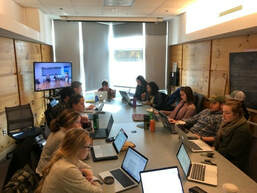
In this core course - Duke PhD students interested in ecology discuss topics in both Evolutionary Ecology and Ecosystem Ecology and consider the interesting intellectual space between these two subdisciplines. The course is taught as a discussion and the meta-learning goals are all about how to have great conversations about ecological science. Read our pair of blog posts about the 2018 version of the course in Rapid Ecology by the instructors and by the students
Spring Breakthrough Short Course: Mucking about in the Marsh
|
|
Students in this field course will spend 4 days at the Duke Marine Lab in Beaufort, NC, exploring the diversity of the coastal wetlands, their ecological functions and the critical services they provide humans. Students will design and carry out short-term field experiments in the marsh and will compare the biodiversity of the salt marsh to nearby oyster reefs, seagrass beds and sandy beach habits. Students should expect to get their feet wet and their hands muddy as we chase fish, crabs, snails and microbes around the NC coast.
|
